Tip & Trick
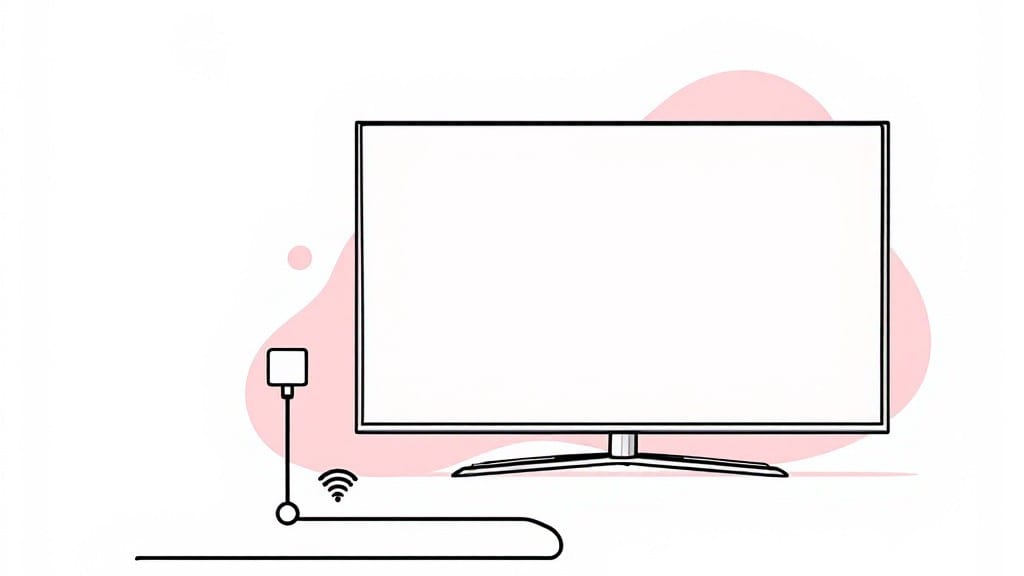
Sharing your PC screen to a TV without cables used to mean fumbling with HDMI adapters and praying for compatibility. ⚡ I’ve tested every wireless method over the past five years—from Windows’ built-in tools to gaming-specific hacks—and the right approach depends on what you’re actually doing.
Whether you’re streaming a movie, gaming, or giving a presentation, there’s a solution that won’t leave you tangled in wires.
The simplest path is usually Miracast for Windows or AirPlay for Mac, but those only work if your TV supports them. My go-to for gaming is NVIDIA Share (if you’ve got an NVIDIA GPU), which delivers near-instantaneous 4K at 60Hz without lag.
For Linux users, third-party tools like Scrcpy or Steam Link often work better than native options. The key is matching your hardware to the right software—no more guessing which method will actually work.
You’ll end up with a setup that’s faster than HDMI, doesn’t require digging through cables, and still looks crisp on your TV. I’ve even used this to turn my old ThinkPad into a presentation machine for community tech workshops—no fancy gear needed.
The trickiest part is usually the first setup, but after that, it’s smooth sailing.
Here’s the breakdown by platform: Windows has Miracast and NVIDIA Share, Mac users can use AirPlay or third-party apps, and Linux often needs Scrcpy or Steam Link.
I’ll walk you through each method, plus the quick fixes for when things go wrong—because even the best setup can hit a snag now and then.
📚 In This Guide
- What you need
- Instructions
- Tips and common mistakes
- Wrapping up and next steps
What you need
- ● 1x PC (Windows 10/11 or macOS with Wi-Fi or Bluetooth)
- ● 1x Smart TV (with built-in Miracast, Chromecast, AirPlay, or HDMI port)
- ● 1x Stable Wi-Fi network (5GHz recommended for smoother performance)
- ● 1x HDMI cable (if using wired mirroring as a backup)
- ● 1x Wireless adapter (e.g., TP-Link N900 for stronger Wi-Fi signals)
- ● 1x Streaming device (e.g., Google Chromecast or Fire Stick for non-smart TVs)
- ● 1x USB-C to HDMI adapter (for laptops without HDMI ports)
- ● 1x Power strip or extension cord (if placing devices far from outlets)
Step-by-Step instructions for wireless PC screen mirroring
Here’s how to mirror your PC to a TV without cables—no tech degree required.
🔧 Step 1: Check TV and PC Compatibility
First, confirm your TV supports wireless mirroring. Most modern Smart TVs (like Samsung, LG, or Sony) use Miracast, while others may require Google Cast or AirPlay. On your PC, open Settings (Windows key + I) and go to System > Display. If you see a Connect button, your hardware supports wireless casting.
I always double-check the TV’s manual for specific instructions—some brands bury the mirroring option under Screen Mirroring or Wi-Fi Direct. If your TV doesn’t show up, you’ll need an HDMI adapter (like a Chromecast or Roku Streaming Stick) instead.
💻 Step 2: Enable Wireless Display on Your PC
On Windows, click the Connect button in Display settings. Your PC will scan for nearby devices. If your TV isn’t listed, open the Action Center (click the speaker icon in the taskbar) and select Connect again. Some TVs require you to enable Miracast in their settings first—check the TV’s remote menu under Network or Display.
If the connection fails, restart both devices. I’ve found that Wi-Fi interference (like routers or phones) can disrupt the signal. Move closer to your TV or use a 5GHz Wi-Fi band for better stability. Once connected, your PC screen should appear on the TV.
🖥️ Step 3: Adjust Display Settings for Best Results
After connecting, right-click the desktop and select Display settings. Choose your TV from the list of displays. Here’s where it gets interesting—the resolution and refresh rate might not match automatically. For a 1080p TV, set the resolution to 1920x1080 and the refresh rate to 60Hz. If the image looks stretched, enable Maintain aspect ratio in the scaling options.
Some TVs default to picture mode settings that make colors look off. On the TV, switch to Cinema or Game mode for accurate PC display colors. If the mirroring lags, lower the PC’s refresh rate to 30Hz or disable Windows Flip 3D (it’s known to cause stutter).
💡 Step 4: Troubleshoot Common Issues
If the TV doesn’t appear, try forcing a refresh by disconnecting and reconnecting the Wi-Fi on both devices. Some PCs need the Intel Wireless Display app (download from Microsoft Store) to work properly. For NVIDIA GPUs, enable NVIDIA Share in the GeForce Experience app—it often works better than Miracast.
Real talk: Audio might not mirror automatically. To fix this, open Sound settings in Windows, select your TV as the playback device, and adjust the volume. If the screen freezes, press Win + P and choose PC screen only to reset. Most issues stem from driver conflicts—update your Wi-Fi adapter and graphics drivers if problems persist.
Tips & tricks for perfect wireless PC screen mirroring
Wireless screen mirroring can be tricky—here are the insider tips that'll save you from frustration and get you streaming like a pro.
Compatibility is Key: Before diving in, check your TV's specific mirroring protocol—Miracast, Google Cast, or AirPlay. I've seen countless people waste time trying to connect when their TV only supports AirPlay, which won't work with Windows' built-in Miracast. For Samsung TVs, look for "Screen Mirroring" in the settings, while LG users should check "Miracast" under Network settings. If your TV doesn't support wireless mirroring, a $35 Chromecast is often the simplest hardware solution.
5GHz Makes All the Difference: Most people overlook their Wi-Fi band when troubleshooting connection issues. Always use the 5GHz band for mirroring—it has less interference and better stability than 2.4GHz. In Step 2, if your connection keeps dropping, switch your router to 5GHz or move closer to it. Pro tip: Disable other devices on your network during mirroring to prevent bandwidth hogging.
Picture Mode Matters More Than You Think: After connecting in Step 3, don't just leave your TV on its default picture mode. Switch to Cinema or Game mode—these modes disable unnecessary color processing that can make your PC screen look washed out. I've noticed some TVs add a blue tint in "Movie" mode that makes white text hard to read. Also, adjust the sharpness setting to 0%—it can create unnatural artifacts when mirroring.
Driver Updates Are Your Secret Weapon: If you're still having issues after following all steps, outdated drivers are likely the culprit. In Step 4, before updating anything, check your Wi-Fi adapter driver and graphics driver versions. For NVIDIA users, the GeForce Experience app often has better mirroring support than Windows' built-in options. I've seen mirroring work flawlessly after a simple driver update that fixed connection drops.
Pro Tips for Share Pc Screen To Tv
- Wireless screen mirroring can be tricky—here are the insider tips that'll save you from frustration and get you streaming like a pro.
- Compatibility is Key: Before diving in, check your TV's specific mirroring protocol—Miracast, Google Cast, or AirPlay.
- 5GHz Makes All the Difference: Most people overlook their Wi-Fi band when troubleshooting connection issues.
Frequently asked questions
Got questions about mirroring your PC to your TV wirelessly? You’re not alone! Here are some of the most common concerns—and their solutions—to make your setup smoother than ever.
Can I mirror my PC to a TV without any cables?
Yes! Wireless mirroring is totally possible using built-in features like Miracast (Windows 10/11) or third-party apps like ApowerMirror or TeamViewer. Just ensure both your PC and TV support Wi-Fi Direct or have a stable local network connection.
Why is there a lag when mirroring my PC to my TV?
Lag usually happens due to network congestion or low bandwidth. Try these fixes:
- Use a 5GHz Wi-Fi network (less interference than 2.4GHz).
- Close background apps to free up CPU/GPU resources.
- Lower the screen resolution or frame rate in your mirroring settings.
- Plug in an Ethernet adapter to your TV for a wired backup.
Does my TV need special features to mirror my PC?
Most modern smart TVs (Samsung, LG, Sony, etc.) support Miracast or DLNA, but older models might need an HDMI adapter (like Chromecast or Fire Stick). Check your TV’s manual or specs for compatibility—Smart TVs with Android TV or webOS work best!
How do I stop mirroring and return to normal TV use?
It’s easy! On your PC, simply:
- Press Win + P and select "PC screen only" (Windows).
- Disconnect the app (e.g., ApowerMirror) from your TV.
- On the TV, exit the screen mirroring mode via the home menu.
What if my PC doesn’t have Miracast? Can I still mirror?
If your PC lacks Miracast, try these alternative methods:
- HDMI cable (wired, no lag, best quality).
- Third-party apps like LetsView or Scrcpy (for Android TVs).
- Google Chromecast (if your TV supports it).
- Roku or Fire Stick with screen mirroring enabled.
My TV isn’t showing up in the mirroring list—what now?
Don’t panic! Try these troubleshooting steps:
- Ensure both devices are on the same Wi-Fi network.
- Restart your PC and TV.
- Update your TV’s firmware and PC’s graphics drivers.
- Check if your TV’s Wi-Fi Direct or screen mirroring option is enabled in settings.
- Use a USB-C to HDMI adapter as a temporary workaround.
Wrapping up and next steps
Sharing your PC screen wirelessly with your TV is easier than ever—no tangled cables required! Whether you’re using Miracast, Google Cast, or third-party apps, the key is choosing the right method for your setup.
With just a few clicks, you can turn your TV into a seamless extension of your desktop, perfect for gaming, presentations, or binge-watching. 🎉
Ready to elevate your viewing experience? Pick the method that fits your tech, follow the steps, and enjoy crystal-clear wireless streaming in no time. Your entertainment (or productivity) just got a major upgrade! 🚀