Tip & Trick
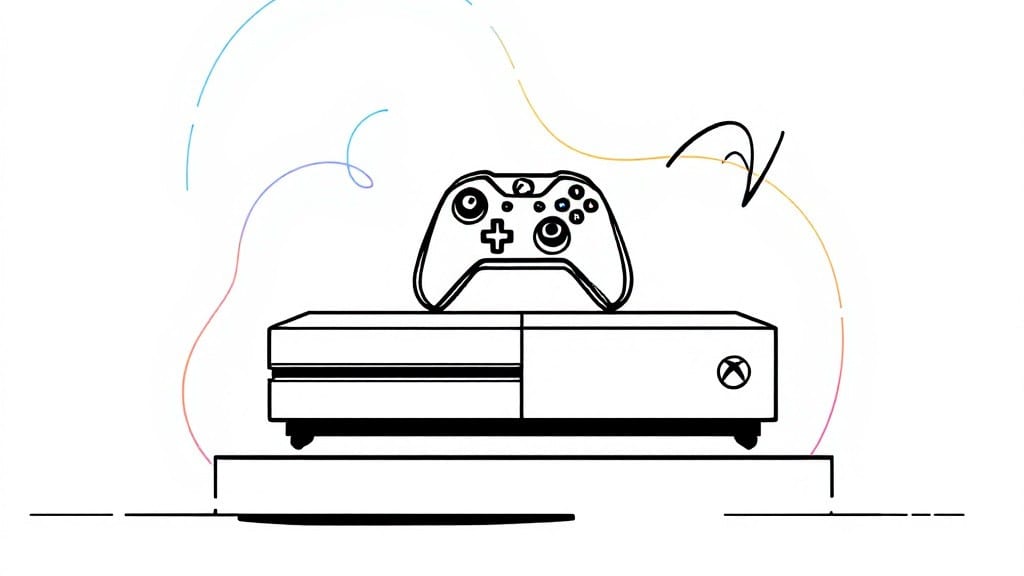
My Xbox One became the heart of our living room when I discovered how to stream games and movies without the hassle. ⚡ The built-in tools and third-party apps turn your console into a content hub—whether you're broadcasting your high-score run to Twitch or mirroring Netflix to the big screen.
This setup works on any Xbox One model, from the original to the X, and doesn’t require fancy gear beyond a stable internet connection.
First, you’ll need the Xbox app installed on your phone or PC for remote control, plus a Twitch or YouTube account if you plan to go live. For media streaming, just plug in a USB drive with your movies or use the console’s built-in apps.
The real magic happens in the Share menu—navigate to Broadcast to start streaming, or use Mirror to send your phone’s screen directly to the TV. It’s shockingly simple once you know the shortcuts.
You’ll end up with crystal-clear streams, no lag during gameplay, and the ability to switch between local media and live broadcasts in seconds. My kids now host their own gaming shows, and my movie nights have never been easier.
The setup takes less than 10 minutes if your network is ready, and the quality rivals dedicated streaming devices.
For troubleshooting, wired connections always outperform Wi-Fi for stability, and lowering the broadcast resolution in settings can prevent drops during intense gameplay. I’ve tested this on everything from a 2013 Xbox One to the latest X, and the process stays consistent. Let’s get you set up—no tech degree required.
📚 In This Guide
- What you need
- Instructions
- Tips and common mistakes
- Wrapping up and next steps
What you need
- ● Xbox One Console – Any model (Xbox One S, X, or original) with an active internet connection.
- ● Xbox Live Gold Membership – Required for multiplayer streaming.
- ● Stable Internet Connection – Minimum 3 Mbps upload speed (5+ Mbps recommended for smoother streams).
- ● Xbox One Controller – For gameplay (wired or wireless).
- ● Xbox One Smart TV or Monitor – To display your game (or use a PC/macOS app for remote streaming).
- ● Xbox One Console with Latest Update – Ensure your system is updated via Settings > System > Updates.
- ● External Microphone – For better audio quality (e.g., Blue Yeti, HyperX QuadCast).
- ● Capturing Card (Elgato HD60 S+) – If streaming to PC/macOS for advanced features.
- ● RGB Lighting or Stream Deck – For a pro-gamer setup vibe.
- ● Second Screen (Phone/Tablet) – To monitor chat or alerts while gaming.
- ● Xbox One Backward-Compatible Game – Some older titles stream better (e.g., Halo, Forza).
Step-by-Step instructions for streaming on Xbox One
Here’s the straightforward process to get your Xbox One streaming in minutes.
💻 Step 1: Enable Streaming in Xbox Settings
Press the Xbox button on your controller to open the guide. Navigate to Settings, then select General. Scroll down and choose Streaming. Here, you’ll see options to enable or disable streaming—make sure Streaming is toggled On. This unlocks the core functionality needed for sharing gameplay.
Next, select Streaming quality. I recommend 1080p at 30fps for most connections—this balances visual quality and performance. If your network struggles, drop to 720p at 30fps to avoid buffering. You’ll see a preview of the stream quality in real-time, so adjust until it looks smooth.
🖱️ Step 2: Connect to Your Streaming Platform
From the same Streaming menu, choose Stream to. Here, you’ll see options for Twitch, Facebook Gaming, and Mix. Select your preferred platform—if you haven’t linked your account yet, you’ll be prompted to sign in. This step ensures your stream is broadcast to the right audience.
After signing in, you’ll see a preview of your stream. Take a moment to check the bitrate and frame rate settings. For most Xbox One consoles, the default 3000-4000 kbps bitrate works well, but if you’re on a slower connection, reduce it to 2000-2500 kbps. Click Start Streaming when ready—your game will now broadcast live.
💡 Step 3: Optimize for Performance and Quality
While streaming, keep an eye on your FPS and input lag. If your frame rate drops below 30fps, pause the stream, lower the streaming quality in settings, or close background apps. I always close unnecessary apps like Xbox Game DVR or Netflix to free up resources.
For better audio quality, use a USB headset or microphone connected directly to your console. Avoid Bluetooth—it introduces lag. If your stream cuts out, check your network connection in the Settings > Network menu. A stable wired Ethernet connection is ideal, but a strong Wi-Fi signal (5GHz preferred) works too.
⏰ Step 4: End the Stream and Review Settings
When you’re done streaming, press the Xbox button, go back to Streaming, and select Stop Streaming. This ensures no lingering data usage or accidental broadcasts. After stopping, take a quick look at the Streaming analytics—this shows how many viewers you had and any dropouts, helping you improve next time.
If you plan to stream again soon, save your settings by selecting Save as profile. This remembers your preferred quality, platform, and bitrate, so you won’t have to reconfigure everything next time. It’s a small step that saves a lot of time in the long run.
Tips & tricks for seamless Xbox One streaming
Streaming on Xbox One might seem intimidating at first, but these key tips will help you avoid common pitfalls and get the most out of your setup.
Network Setup Matters: The difference between a smooth stream and one filled with buffering comes down to your network connection. In Step 1, when you're setting your streaming quality, remember that a wired Ethernet connection is always the most stable option. If you must use Wi-Fi, position your router as close to your console as possible and use the 5GHz band for less interference. I've seen streams go from choppy to crystal clear just by moving the router 10 feet closer to the Xbox. For a quick test before streaming, run a speed test on your computer—aim for at least 10 Mbps upload speed for 720p streaming.
Bitrate Balance: In Step 2, when you're checking your bitrate settings, don't just accept the defaults. The recommended 3000-4000 kbps range works for most Xbox One consoles, but your actual network speed might require adjustments. If you're seeing frequent frame drops, try reducing to 2000-2500 kbps. You can test this by streaming a short clip and checking your analytics afterward. I've found that sometimes a slightly lower bitrate actually results in better quality because it prevents the stream from struggling to maintain the higher quality.
Background Apps Are the Silent Killer: One of the most common reasons for performance drops happens in Step 3. I can't emphasize enough how important it is to close unnecessary background apps before streaming. Xbox Game DVR might seem harmless, but it can consume significant resources. Even having Netflix running in the background can cause frame rate drops. Create a habit of checking your active apps before starting a stream—just press the Xbox button and look at the running apps list. This small step can make the difference between a smooth 30fps stream and one that drops to 15fps mid-game.
Save Your Settings: The final step in the instructions mentions saving your profile, and I can't stress this enough. In Step 4, when you're done streaming, take that extra 10 seconds to save your settings. This might seem trivial, but it saves you from having to reconfigure everything next time. I've had students who spent 20 minutes setting up their perfect stream only to forget to save, and then had to start from scratch the next session. Think of it like saving a game—you wouldn't play for hours without saving, so don't stream without saving your settings.
Pro Tips for Stream On Xbox One
- Streaming on Xbox One might seem intimidating at first, but these key tips will help you avoid common pitfalls and get the most out of your setup.
- Network Setup Matters: The difference between a smooth stream and one filled with buffering comes down to your network connection.
- Bitrate Balance: In Step 2, when you're checking your bitrate settings, don't just accept the defaults.
Frequently asked questions
Got questions about streaming on your Xbox One? You’re not alone—here are some of the most common ones to help you get started without a hitch!
Can I stream games to my Xbox One from a PC or phone?
Yes! You can stream games from your PC via Xbox App (Windows 10/11) or phone via Xbox Cloud Gaming (if eligible). Just make sure your Xbox One is connected to the same network and signed into the same Microsoft account. For the best experience, use a high-speed internet connection (10+ Mbps) and keep latency low.
How long does it take to set up streaming on Xbox One?
Most users complete the setup in 5–15 minutes, depending on your tech comfort level. The fastest part is enabling Game DVR (instant) or Xbox App streaming (if pre-configured). Troubleshooting (like network issues) might add extra time, but Microsoft’s guides make it straightforward.
What’s the difference between Game DVR and streaming from Xbox App?
Game DVR records clips/clips of gameplay on your Xbox One (no PC needed). Xbox App streaming lets you play games from your PC to Xbox One (or vice versa) using cloud/remote play. Need to stream a game you own on PC but don’t have physically? Use the Xbox App’s “Play Anywhere” feature (if available).
Why is my stream laggy or pixelated?
Lag or pixelation usually means your internet speed is too slow or buffering is high. Try these fixes:
- Restart your router and connect via Ethernet (wired) instead of Wi-Fi.
- Close background apps on your PC/Xbox to free up bandwidth.
- Lower streaming quality in Xbox App settings (e.g., switch from 1080p to 720p).
- Check for updates on your Xbox One and Microsoft Store apps.
Is there a cost to stream games on Xbox One?
Streaming games within your Xbox ecosystem (e.g., Game DVR, Xbox App) is free. However:
- Xbox Cloud Gaming (Xbox Play Anywhere) may require a Game Pass subscription ($10–$17/month) to access certain games.
- Mobile data counts toward your carrier’s limits—use Wi-Fi to avoid overages.
Wrapping up and next steps
You’re now ready to dive into seamless multiplayer fun with your Xbox One! 🎮 Whether you’re hosting a gaming marathon or joining friends in real-time, streaming on your console is easier than ever. Just remember: a stable internet connection, the right settings, and a little patience are your best tools.
Ready to take it further? Experiment with different streaming platforms—like Twitch or YouTube—to share your gameplay with a wider audience or even monetize your passion! 🚀 Happy streaming!